Testing of Metals and Metal Products
A full range of laboratory tests to assess the strength, ductility, resistance and quality of metal materials and structures.
About the service
Metals form the basis of most load-bearing and enclosure structures in construction, industry and engineering systems. Their quality determines the strength and reliability of the structure, its resistance to loads, corrosion, temperature effects and long-term service.
Deviations in composition, rolling defects, reduced strength or incorrect heat treatment of the metal can lead to deformation, failure of elements, accidents and costly remedial works. Laboratory testing of metals is therefore a mandatory part of construction control, design and installation.
Our laboratory tests metal specimens, products and structural elements, determining their actual properties and compliance with GOST requirements, design parameters and technical specifications. The results are issued as an official test report accepted by technical supervision, contractors and regulatory authorities.
Methods and standards
The list is adjusted to the design and accreditation scope. If a method is missing, ask our engineer.
| Method | Standard | Where |
|---|---|---|
| Spectral chemical analysis of steel | GOST 18895-97 | Site + lab |
| Tensile testing | GOST 1497-84 | Laboratory |
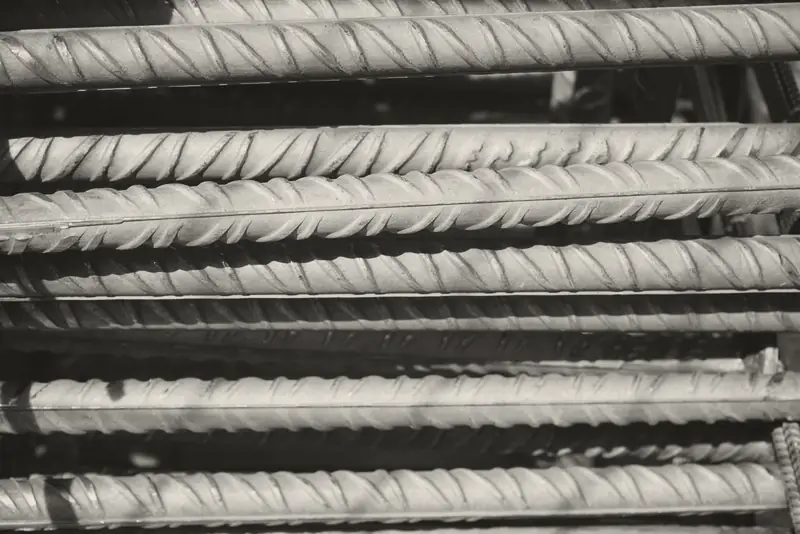
| Tensile testing of rebar | GOST 12004-81 | Laboratory |
| Bend test | GOST 14019-2003 | Laboratory |
| Impact toughness | GOST 9454-78 | Laboratory |
| Brinell hardness | GOST 9012-59 | Site + lab |
| Rockwell hardness | GOST 9013-59 | Laboratory |
| Rebar conformity | GOST 34028-2016 | Assessment |
Why it matters
Testing makes it possible to:
- 01determine the actual strength and ductility of the material
- 02identify hidden defects and deviations in rolled metal production
- 03confirm that the metal meets GOST and design requirements
- 04rule out the use of substandard or unsuitable materials
- 05assess the effect of service conditions and corrosion on the condition of structures
- 06provide documented confirmation of metal quality during construction and reconstruction
- 07monitor suppliers and the quality of every batch
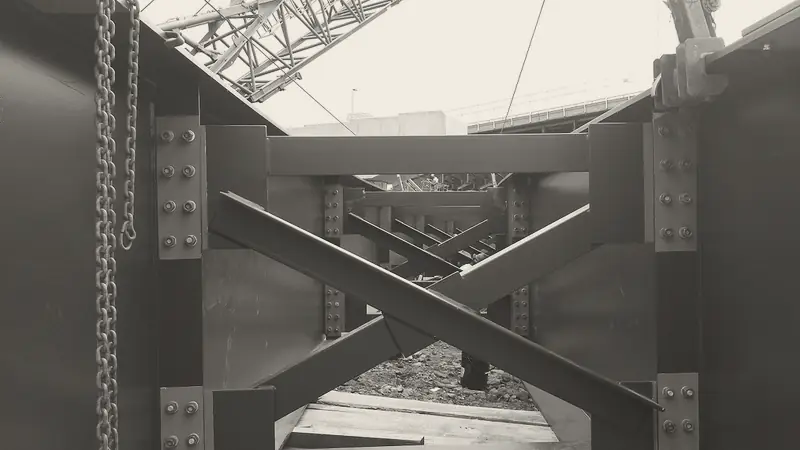
Metal testing is particularly important in the installation of steel structures, engineering systems, welded assemblies, tanks, trusses, crane runways and other critical elements.
Testing stages
- 01
Receiving the brief
We agree the metal type, conditions of use and the scope of investigation required.
- 02
Sampling or receiving specimens
We take fragments of structures, acceptance samples or mill specimens. A site visit is arranged where necessary.
- 03
Preparing the material
We cut, label, grind and prepare the specimens in accordance with the standards.
- 04
Laboratory investigation
We carry out a set of tests and determine the physical and mechanical characteristics of the metal.
- 05
Analysing the data and checking against standards
We assess compliance with GOST, design requirements and technical specifications.
- 06
Issuing the official report
We provide a document with the results, conclusions and recommendations on the further use of the metal.
Our advantages
- Testing of all types of metals and metal products
- Modern certified equipment
- Official test reports for construction control
- Quality control of materials before and after installation
- Site visits available
- Detailed expert opinions with recommendations
Who it is for
- Construction and installation organisations
- Manufacturers of rolled metal and precast concrete
- Developers and technical supervision
- Engineering and design firms
- Industrial facilities and operating organisations
Common questions
How many specimens per batch?
Can you identify the grade without cutting a sample?
Testing metals is a mandatory stage in ensuring the safety and reliability of structures.
We carry out accurate laboratory investigation and provide official documentation that guarantees the quality of the materials used.
Request received
An engineer will contact you within one business hour. For urgent matters, please call.
Mon–Fri 9:00–19:00 (MSK), site visits on weekends by arrangement